
_edited.jpg)
April is stress awareness month

How does stress affect us?
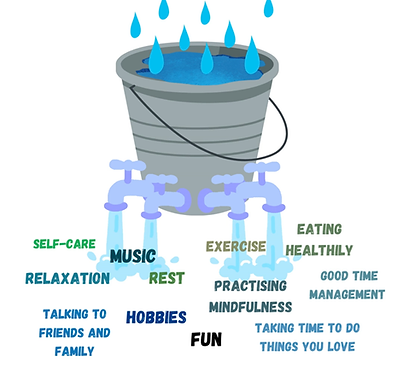
Think of everyone as having an invisible bucket that holds stress.
What goes into the bucket?
Any kind of stress - from work, family, caring responsibilities, health problems, or even pressure you put on yourself.
How does the bucket work?
Imagine pouring a little water into your bucket every time you feel stressed. As your day, week, or month goes on, the bucket fills up more and more. If the bucket gets too full, it will overflow.
When that happens, you might feel overwhelmed even by small things.
When you’re overwhelmed, you might:
Say "yes" to everything even when you’re too tired
Feel angry or annoyed easily
Avoid looking after your physical or mental health
Make quick decisions without thinking
Feel emotions like fear, worry, frustration, or panic
How can we empty the bucket?
Your bucket can be emptied by doing things that help you feel better, like:
Resting
Doing something relaxing, like a breathing exercise, or doing something you enjoy or that brings you a sense of peace. This is called self-care. Self-care is different for everyone but it can include activities like, gardening, spending time with pets, listening to a podcast, reading, having a bath, talking to someone you trust, having a cup of tea, taking a break
Deep Breathing (1-2 mins):
Calm breathing is key to being calm and relaxed. Take a deep breath in through your nose. Now exhale through your mouth, as if you are blowing out a candle. Blow out all the air. An important part of calming breathing is to ensure that the out-breath is longer than the in-breath, try counting to 4 as you breathe in, hold your breath for a count of 6, then breathe out for a count of 8.
As you inhale, focus on slowing down your breathing into a calm rhythm. Exhale fully, releasing all the air. Continue to breathe slowly.


Comments